
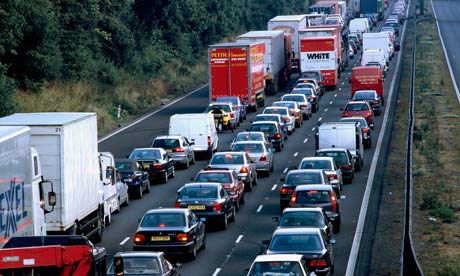
Ten million more people, at least 4 million more cars, a near 50% rise in traffic. This bleak vision of the future is portrayed by the Department for Transport's own figures. Yet not only is the department doing little to warn the UK's 34 million drivers and industrialists of the mayhem that lies further down the road, it has little meaningful in policy terms to actually do anything about it.
By 2035 the nation's population is predicted to reach 73 million and these people will want, and need, to get about. And whether we like it or not most of their travel will be by car. For all the benefits and attractions of public transport it is essentially a sideshow, a distraction from the real issue. You only have to look at the numbers.
Currently, 91% of all passenger miles take place on the roads, the vast majority in private cars. Just 8% of passenger miles are by train (and much of that is in London). Even if rail travel was to double – which it won't, not least because rail users are heavily subsidised – it would still be a minority activity.
The reality is that cars will remain the only practical way for most people, most of the time, to get to work, do the shopping, visit friends and relatives and access education and healthcare.
Then there is the economic growth agenda. Traffic is down at the moment because of the state of the economy. But government has to achieve a return to industrial growth. That can only happen if there is adequate transport – and in practice that means reliable roads – to serve the needs of industry and commerce.
If the forecasts are to be believed we should all start allowing a lot more time for our journeys.
Congestion is set to increase by 50% in little over two decades. This might not sound a huge amount, but remember this is only an average. On busier routes, at the busiest times of day, the delays will be much, much greater causing not just great inconvenience and frustration to individuals but costing businesses dear.
What makes the situation worse is that this crystal ball gazing was done before last year's comprehensive spending review, as a result of which investment in the road network was slashed.
Research by the RAC Foundation and the consultancy firm Arup suggests there are 96 major road schemes sitting on the shelves of the Department for Transport without current funding. The majority of these projects are not about creating brand new routes, but upgrading and enhancing what we have already got, removing the bottlenecks that literally bring the nation to a halt. Most of the schemes deliver tremendous value for money, and the top 10 schemes all offer £6 of benefits for every £1 spent. Contrast this with HS2 – the high speed rail link between London and Birmingham – which will only deliver a return of £1.60 for £1 of taxpayers' cash. Whatever the merits of HS2 in isolation, they appear nothing better than mediocre when put alongside the roads schemes.
Successive governments have failed to grasp the nettle of future traffic growth. You can sort of see why. Increased congestion tends to occur on a drip, drip basis (and indeed it is true to say that total mileage has dropped slightly because of the recession). Motorists tend to grin and bear it. Yet the jams have a real impact on all of us and if we are to tackle them then we need to take a long-term view. So far ministers have declined to do so. It's about time that attitude changed.
