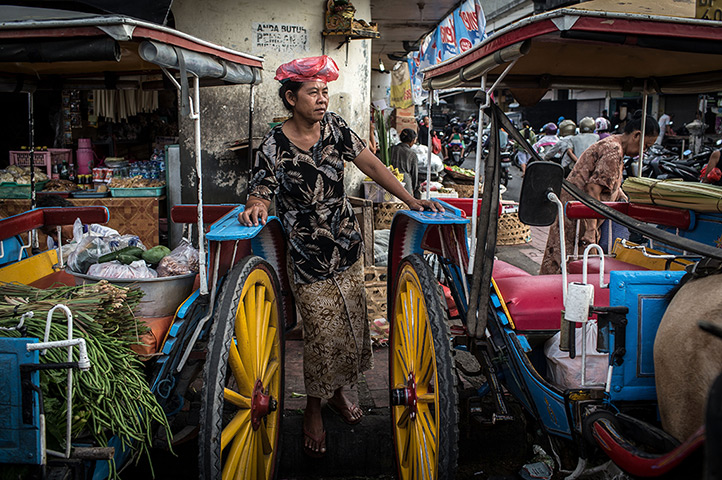
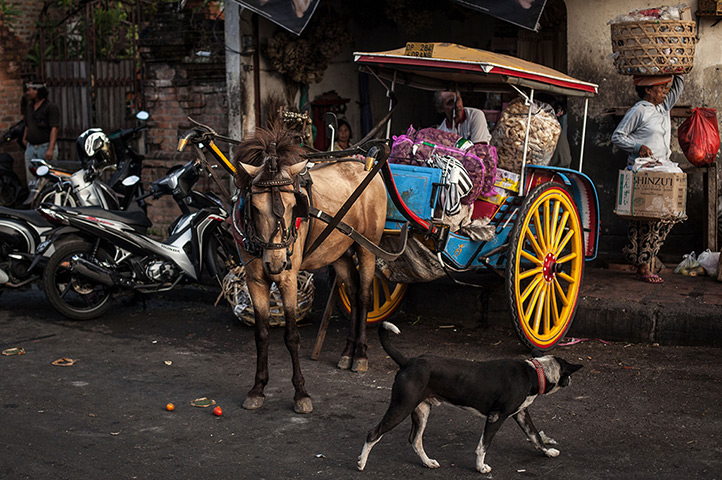
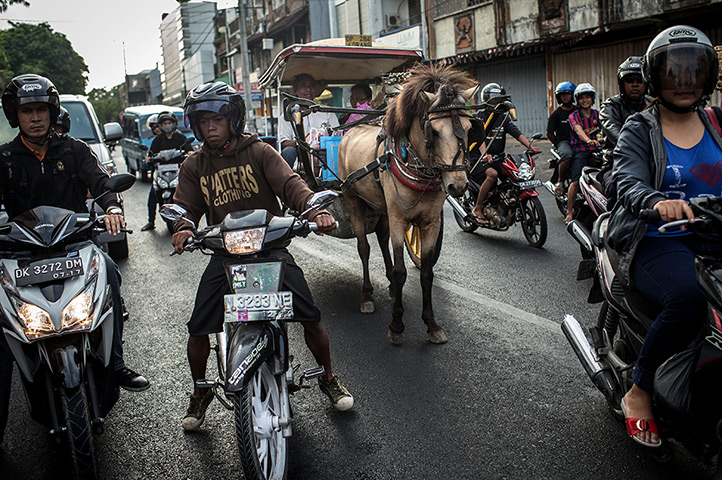
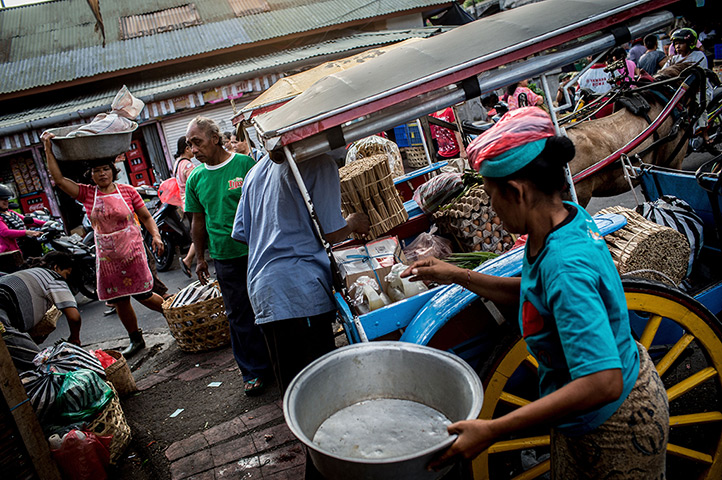
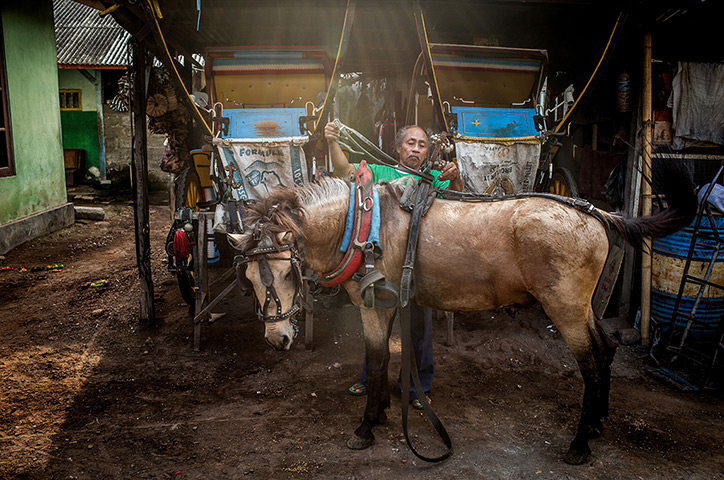
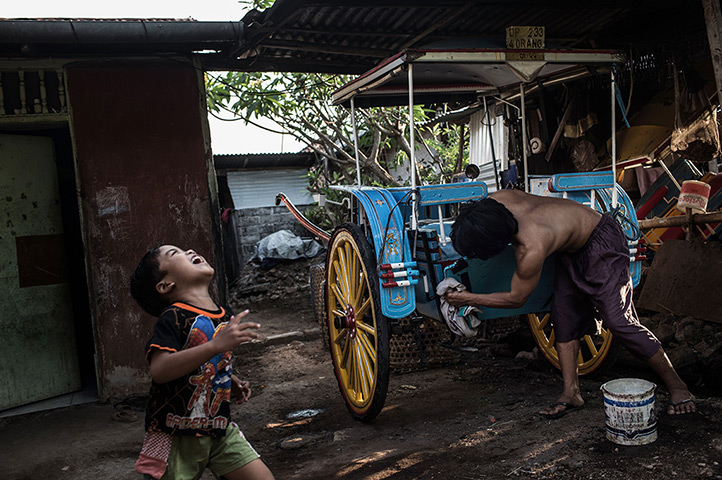
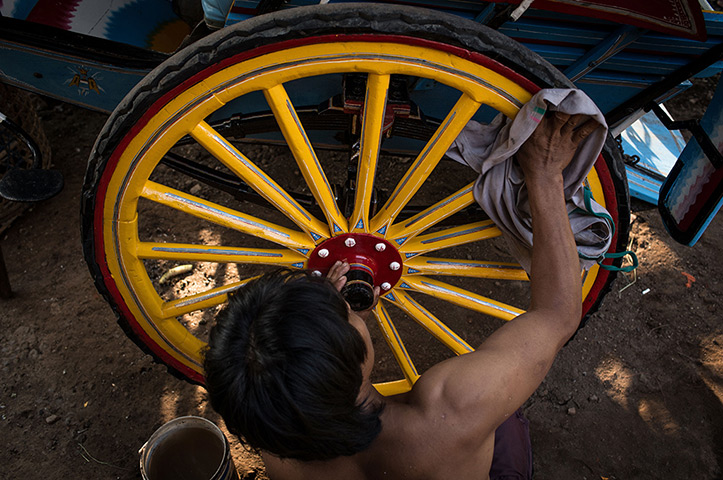
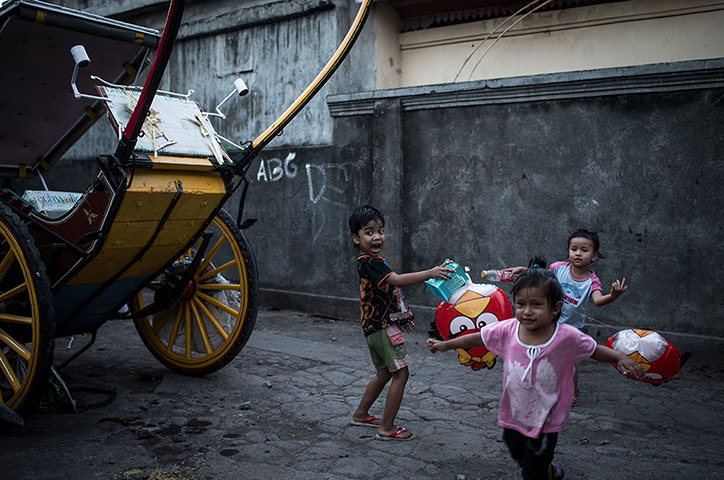
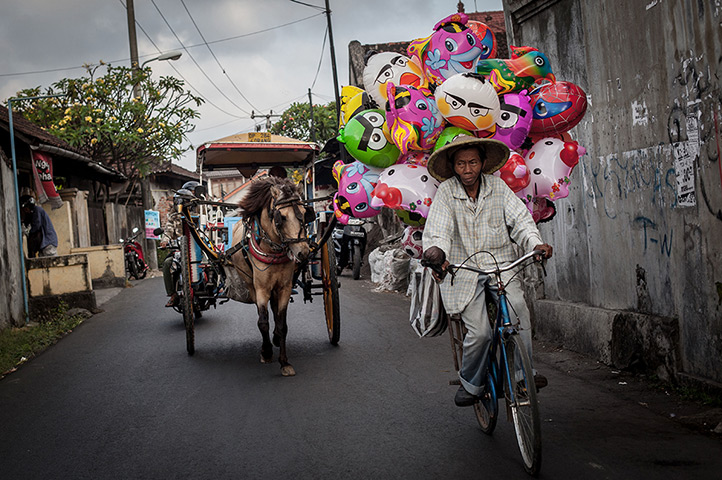
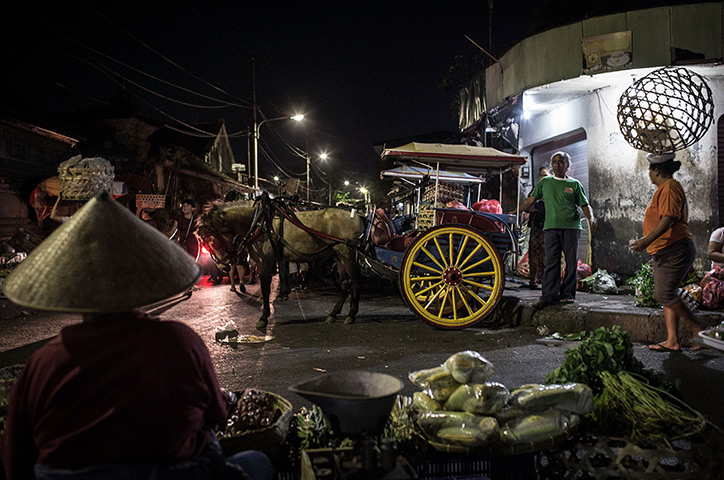
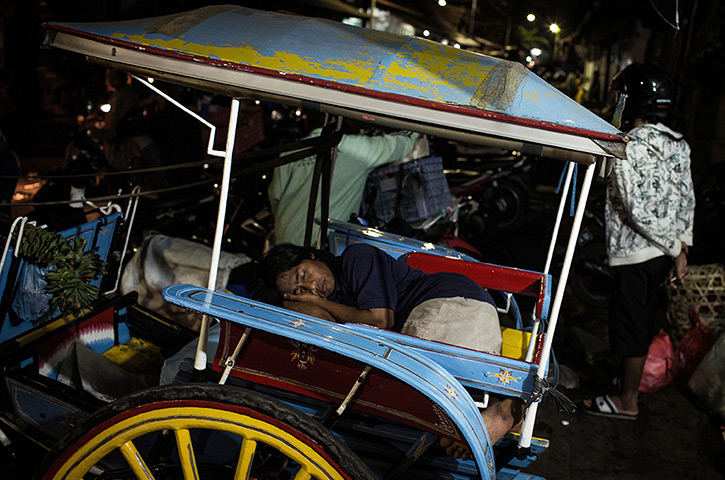
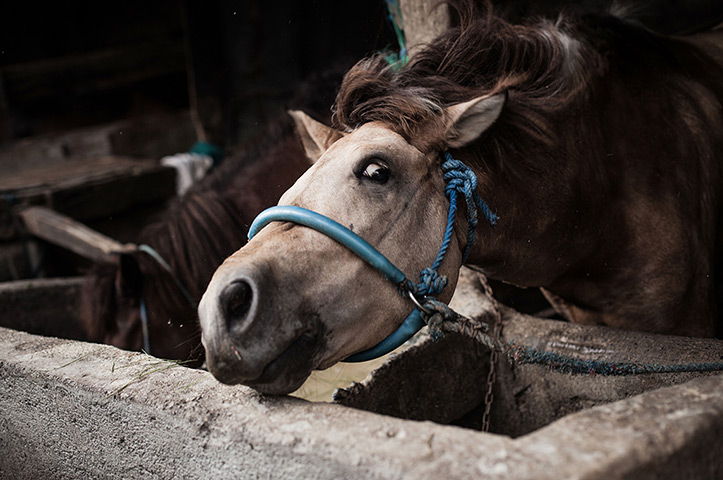
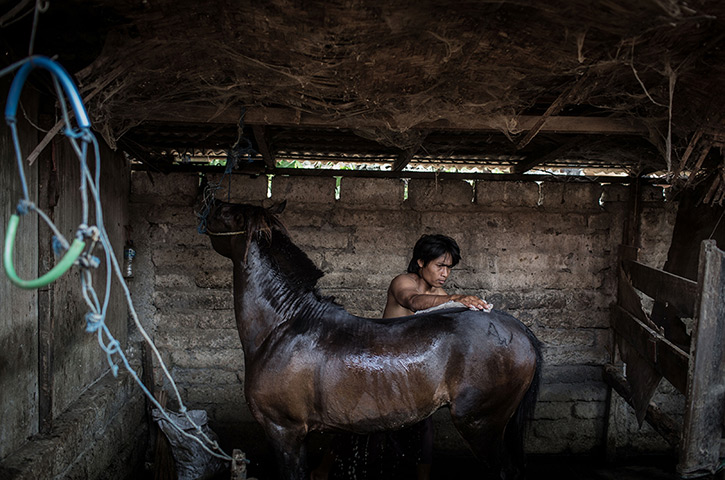
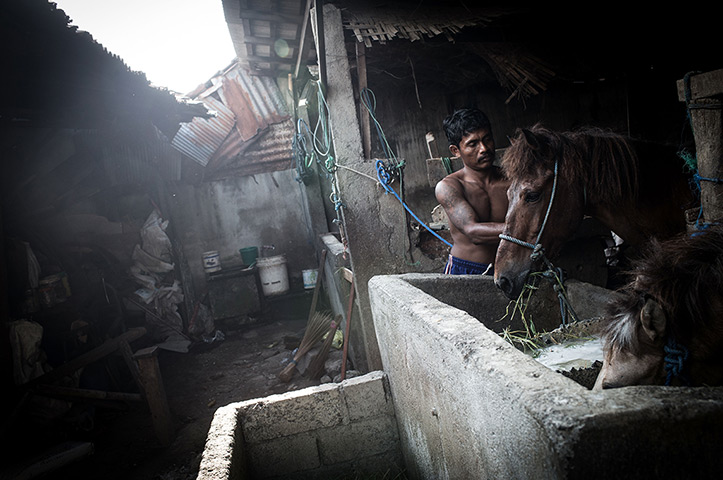
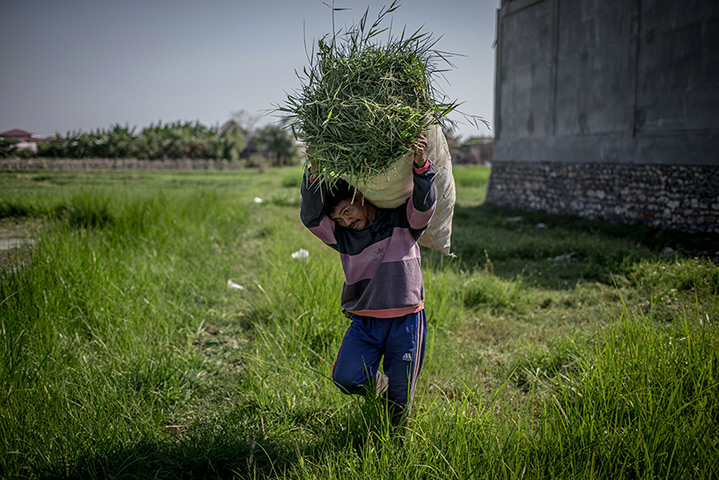
A woman waits to transport her produce from Badung market, Denpasar, Bali, using a Dokar, or traditional horse and cart. Photograph: Chris McGrath/Getty ImagesA colourful cart parks up alongside motorbikes at Badung market.Photograph: Chris McGrath/Getty ImagesNyoman Mantra Manik, 55, a kusir (or Dokar driver) takes his place in the traffic of Denpasar. Increasingly, the availability of motorcycles and other vehicles is pushing the Dokar to obsolescence.Photograph: Chris McGrath/Getty ImagesPassengers help to load up a Dokar at Badung market.Photograph: Chris McGrath/Getty ImagesNyoman Mantra Manik releases his pony from the Dokar harness. Photograph: Chris McGrath/Getty ImagesAnother Dokar driver, Nyoman Yasa, cleans his cart for the road.Photograph: Chris McGrath/Getty ImagesA thorough clean includes a wash and polish for the wooden wheels.Photograph: Chris McGrath/Getty ImagesChildren in Denpasar enjoy the freedom of the streets.Photograph: Chris McGrath/Getty ImagesAs Bali has turned into a tourist mecca, the Dokar has declined as a crucial part of everyday business.Photograph: Chris McGrath/Getty ImagesFor Nyoman Mantra Manik the average working hours are from 2.30am to 8am, which might bring in $7.Photograph: Chris McGrath/Getty ImagesIn the early hours Nyoman Yasa snatches some sleep in his Dokar at Badung market.Photograph: Chris McGrath/Getty ImagesThe pony belonging to Nyoman Mantra Manik shakes off the street dust.Photograph: Chris McGrath/Getty ImagesNyoman Yasa takes time to wash his horse down at the stables.Photograph: Chris McGrath/Getty ImagesMade Puja, also a Dokar driver, ensures the ponies are fed. Photograph: Chris McGrath/Getty ImagesPhotograph: Chris McGrath/Action imagesMade Puja carries a sack of freshly cut grass for his equine workmates.Photograph: Chris McGrath/Getty Images